

 Facebook
 X
X
 Pinterest
 Copy Link
Buying a home is exciting—but it’s also one of the largest financial decisions most people will ever make. While emotions, showings, and negotiations all play a role, one step should never be overlooked: the property inspection.
A home inspection isn’t just a box to check. It’s a critical tool that helps buyers understand what they’re really purchasing.
What a Home Inspection Actually Covers
A professional home inspection provides a detailed overview of a property’s major systems and components, including:
- Roof, foundation, and structural elements
- Plumbing, electrical, and HVAC systems
- Water heaters and appliances
- Windows, doors, and insulation
- Evidence of water intrusion, mold, or pest activity
The purpose is simple: identify existing issues and highlight potential concerns before closing—not after.
Why Inspections Matter to Buyers
Even well-presented homes can have underlying issues that aren’t visible during a walkthrough. Inspections help buyers avoid unpleasant (and expensive) surprises and allow them to move forward with eyes wide open.
They help buyers:
- Understand the true condition of the property
- Plan realistically for future repairs or maintenance
- Make informed decisions based on facts, not assumptions
This step is about clarity, not fear.
Negotiation Power—With Perspective
Inspection results often become part of the negotiation process. When legitimate, unexpected issues are discovered, buyers may reasonably request repairs or credits.
However—and this is where perspective matters—not all inspection findings justify renegotiation.
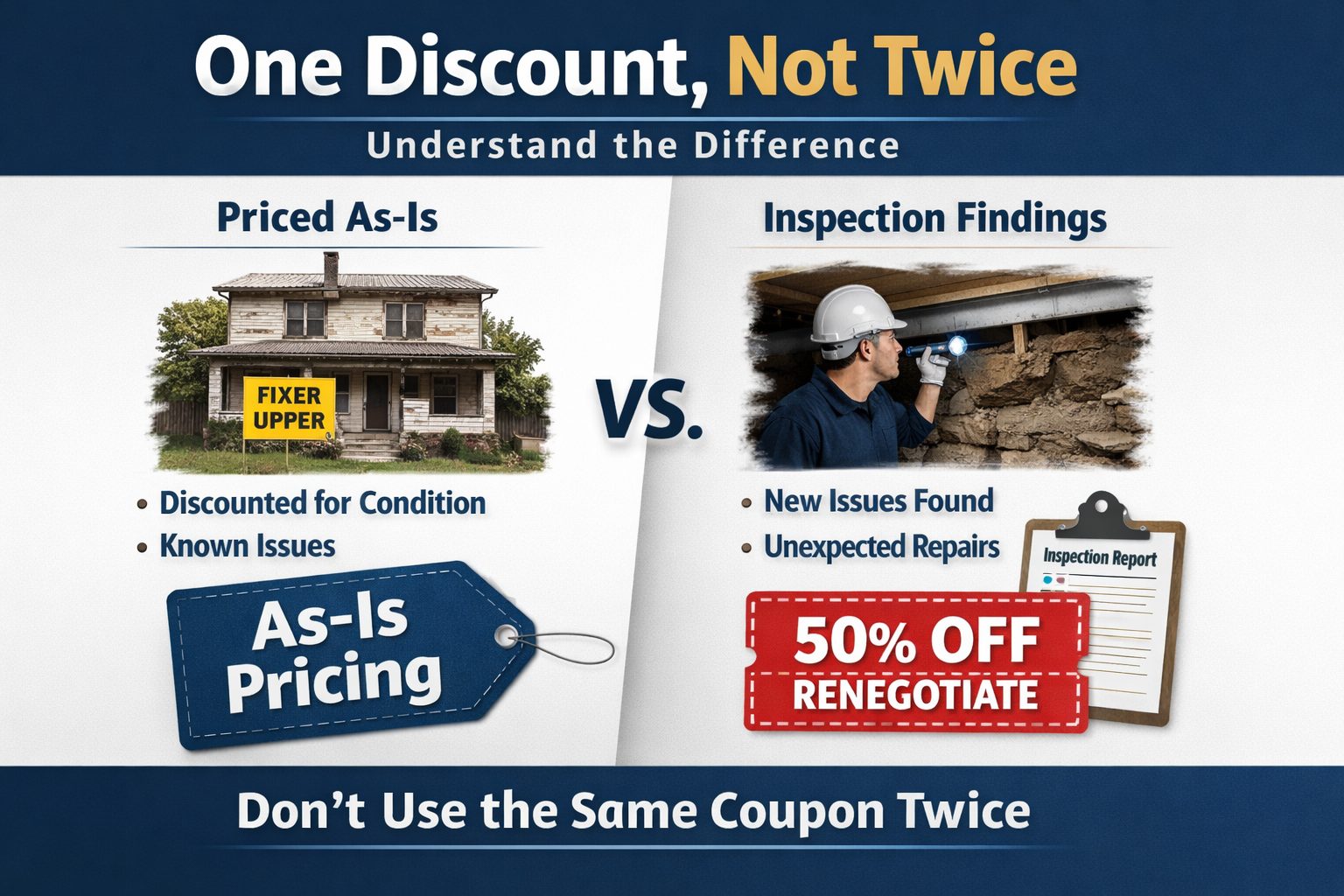
If a property was clearly priced to reflect its as-is condition, attempting to renegotiate the price for issues that were already factored into the original pricing is essentially trying to use the same coupon twice.
In these cases:
- Cosmetic wear, deferred maintenance, or known conditions are often already baked into the price
- Renegotiating for expected issues can weaken a buyer’s position
- Overreaching after inspections can jeopardize an otherwise solid deal
Inspections are meant to identify unknown or material issues—not to reopen pricing discussions for items that were clearly disclosed or anticipated.
As-Is Doesn’t Mean “No Inspection”
It’s important to understand that “as-is” does not mean “inspect at your own risk.”
Buyers should still conduct inspections on as-is properties to:
- Confirm the scope of issues
- Assess safety or structural concerns
- Decide whether the property still makes financial sense
The difference is how the information is used. Inspections in as-is transactions are primarily about informed decision-making, not leverage.
The Real Value: Confidence and Clarity
At the end of the day, inspections provide peace of mind. Whether the home is turnkey, fixer, or priced at a discount, knowing what you’re buying allows you to proceed confidently—or walk away if necessary.
Final Thoughts
A home inspection is one of the smartest investments a buyer can make. It protects against surprises, supports fair negotiations, and ensures buyers aren’t making emotional decisions with financial consequences.
Just remember:
Use inspections to gain knowledge—not to renegotiate what was already reflected in the price.


